
As seen on Epicure Vietnam Online, here.
Fiery, numbing and alluring, Sichuan peppercorns are the ultimate flavour bomb. Responsible for uplifting Sichuan cuisine to the world stage, they provide a culinary kick we come back for again and again. Get to know the intricacies of these legendary berries, and maybe one day you will be able to blow the minds of your guests by introducing these piquant peppercorns into your cooking.
There are few cuisines in our world more complex, dynamic, and flavourful than Sichuanese food. One of China’s Eight Great Cuisines, the culinary offerings of this southwestern Chinese province are unparalleled anywhere in the world. As the birthplace of cult favourites like Mapo Tofu, Dan Dan Noodles, and Hot and Sour Soup, Sichuan’s capital city, Chengdu was recognised by UNESCO as the second ever city to become a City of Gastronomy. Now, globally adored, these dishes optimise the bold flavour bombs known to Sichuan cuisine, balancing numbing spice and pungent aromatics, and they owe their success to one key ingredient: Sichuan peppercorns.
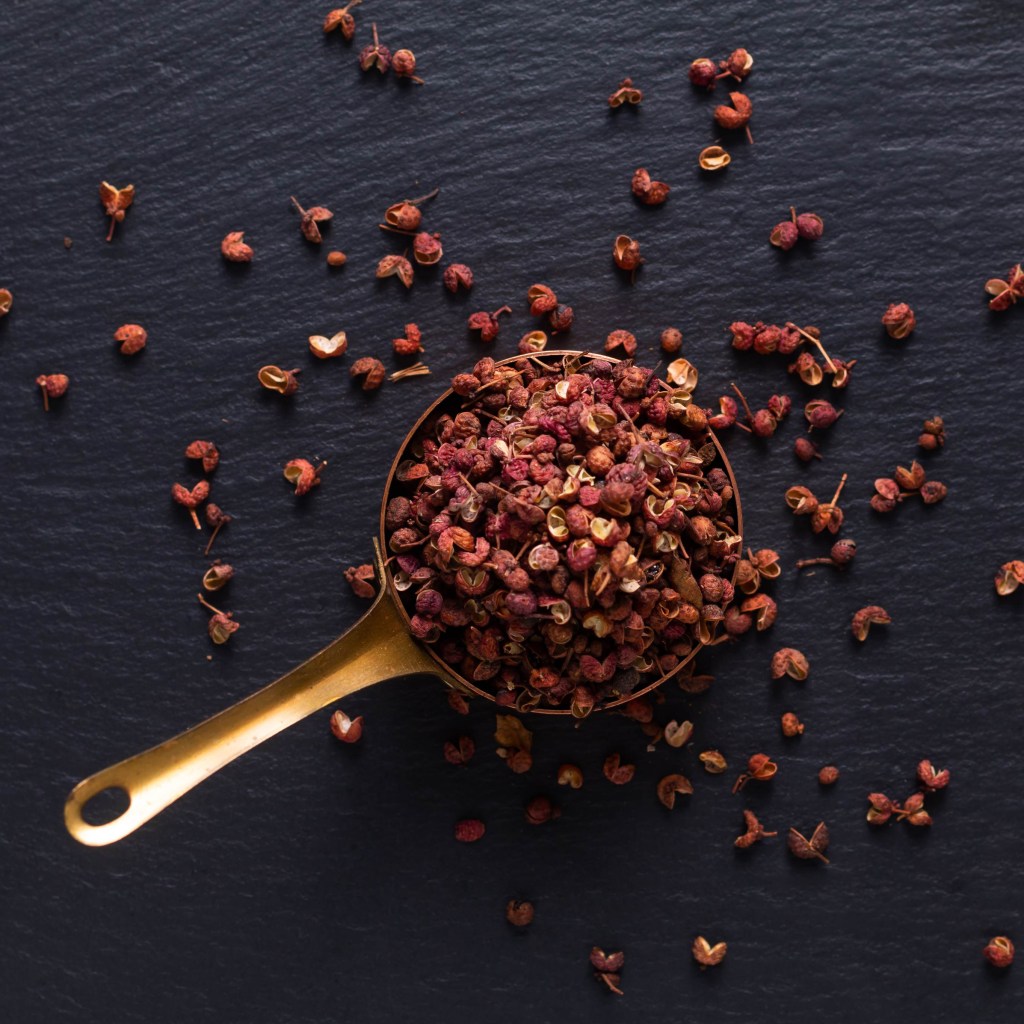
First of all, unlike you might assume, Sichuan peppercorns are not actually peppers. Opposed to the red chillies commonly used in Sichuan cooking, these crinkly peppercorns are actually the berries of the prickly ash tree, which is a member of the citrus family found in Western regions of China.
In ancient times, Sichuan peppercorns were used for different purposes other than cooking. Instead, they were used to relieve tooth pain with their numbing properties. They have also been incorporated into topical medicines and tinctures for their anti-inflammatory and analgesic effects. Sichuan peppercorns even once served as fertility gifts for ancient emperors and their concubines. Now, they constitute one of the five key ingredients used in Sichuan cooking, without which they wouldn’t be the same, and are favoured by many for their numbing effect.
Only harvested once every year, they are arduously hand-plucked under the heat of the sun where they are laid out to dry. As they dry, the berries unfold into a unique floral shape inspiring its local nickname, ‘hua jiao’, or “flower pepper”. Once they open up, the dried husks dispel their bitter seeds, and all thorns, seeds and twigs are removed by hand until they are painstakingly pristine. From start to finish, the production of Sichuan peppercorns is truly a labour-intensive process, but one that is also a labour of love.
How do they taste?
When you first bite into a Sichuan peppercorn, you’re likely to find it bitter initially. Then, the numbing sensation evolves and you will feel your tongue tingle. As it sits in your mouth, the flavour develops, and a juicy, citrusy aftertaste is left behind.
There are two distinct varieties of Sichuan peppercorns, the first of which are red peppercorns, which exhibit an earthy depth with a zingy kick. The second variety, green peppercorns, are more rare and have a piney and floral profile.
While Sichuan peppercorns themselves are not spicy hot, when married with the flavour profile of red chillies, the intense heat of the chillies is numbed by the peppercorns to produce a sensational flavour that tingles your tongue, rather than attacks it with spiciness, in an edible sensory experience.
How do I cook with Sichuan peppercorns?
Recipes frequently call for the peppercorns to be roasted and ground, ideally with a mortar and pestle, or a spice grinder, but the back of your knife will do. Once you have ensured that the peppercorns are free of leaves, twigs and seeds, heat the peppercorns in a frying pan over medium heat and crush them after they have cooled down.
Sichuan peppercorns are used in almost every Sichuan dish known to man. It’s also used to make an absolutely addictive Sichuan peppercorn oil, used as a condiment alongside the cuisine’s delicious dishes.
Sichuan cuisine is famous for its stir-fried lamb, combining the numbing quality of Sichuan peppercorns with the heat of red chillies, with the addition of cumin and other spices for a mind-blowing result.
Another classic combination is Sichuan peppercorns and dry-fried green beans. Once again, like in almost every dish using Sichuan peppercorns, it is the addition of red chillies that heightens the experience of these mouth-numbing marvels, but that doesn’t mean you have to.
Equally, it can elevate almost any protein to the next level, as it is used in fish, poultry, vegetable, meat and noodle dishes. You can even incorporate it into western dishes to give it a zingy kick, whether that’s a burger, pizza or pasta.
How do I store Sichuan peppercorns?
As Sichuan peppercorns are dried, they won’t necessarily “go bad”, but they won’t last forever. In improper storage conditions, the peppercorns lose their potency rapidly, and lose their tingly flavour. To store them correctly, place them in a cool environment in an airtight container, away from light and moisture. Follow these steps, and they can last up to a few years. Ground peppercorns on the other hand will lose their potency after a few months.
To check the freshness of the peppercorns, simply give them a sniff, and if they still have that citrusy aroma, they’re good to go. The highest quality peppercorns will have the strongest smell, so much so that if you hold it in the fist of your hand, you can still smell it from the other side.
How do I choose the best peppercorns?
The first thing to know about buying Sichuan peppercorns is that given the choice, you should always buy whole, fresh husks in clear packaging rather than the pre-ground and bottled varieties.
Secondly, when buying red Sichuan peppercorns whole, look out for the brightest shades of pink and red, as those are the freshest, and therefore best. Avoid peppercorns that look dark or discoloured.
Finally, avoid packages with seeds and stems, as they can be laborious to remove before cooking. Make sure they don’t get into your food, as there may be a gritty taste.

 love-becca.com