
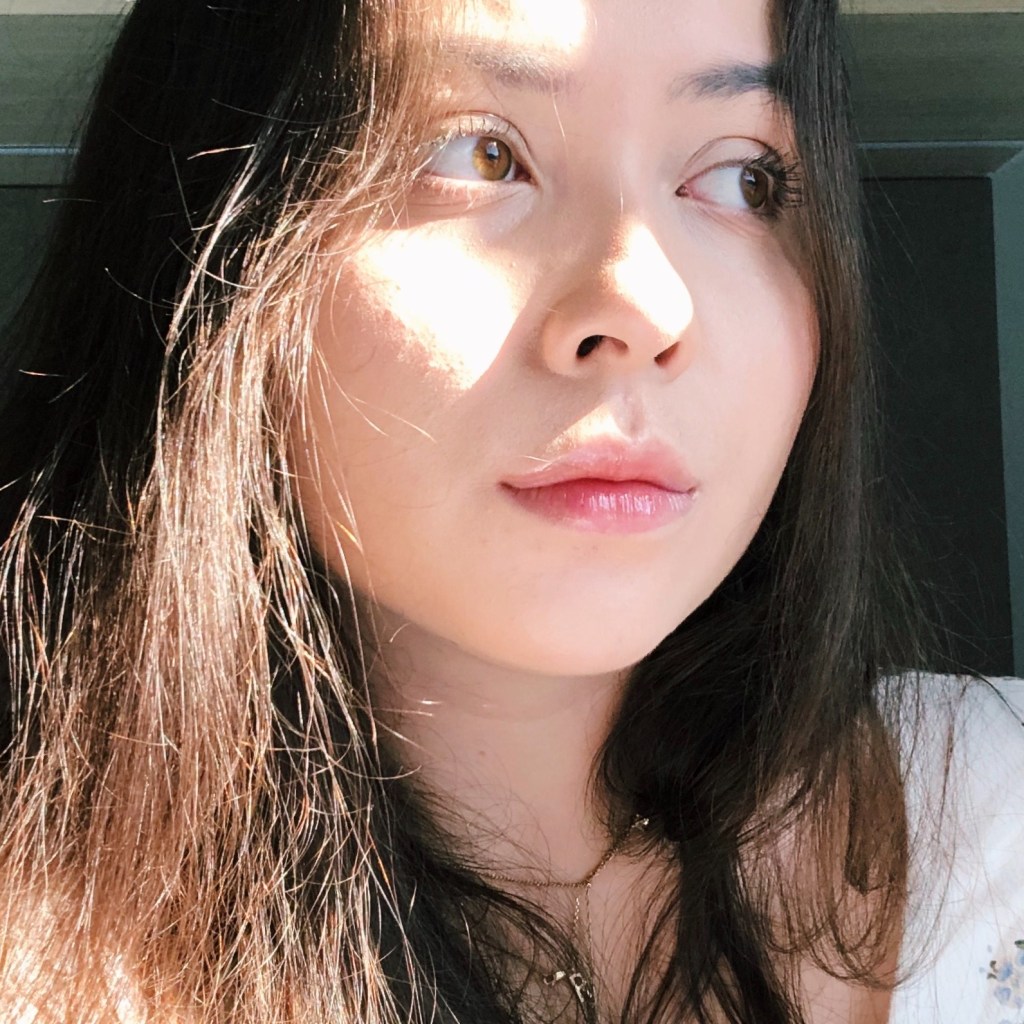
Growing up in Asia is a funny thing when you’re white, or at least white passing. Even though I was raised by my divorced Vietnamese mother, as a kid it was hard for me to identify as anything other than white, as that’s how most people read me.
My mother rarely spoke to me in anything other than English at home, but when it came to it, she was certain I spoke Vietnamese. After all, I am her daughter, and I do speak Vietnamese. But whenever she introduced me to her Vietnamese colleagues, I’d usually just smile and say “Hello”. I was shy, terrified even, of speaking Vietnamese in front of her, of embarrassing her in case my tongue slipped and let out: I’m not really Vietnamese.
I was at a party 6 months ago, and other than a close friend of mine, there was one other Vietnamese person in the room. For a solid half hour, I beamed as we chatted about our hometowns, how much we missed them, and the mouth-watering food we would eat if GrabFood somehow delivered across oceans. Then, from left-field, my close friend came up to me and said “God, you sound like such a Việt Kiều right now.”
A Việt Kiều – a Sino-Vietnamese word literally translating to “Vietnamese sojourner” – is someone who is ethnically Vietnamese, but has spent most of their life living overseas. While there’s absolutely nothing wrong with being a Việt Kiều, there are about 4.5 million of them, in Vietnam Việt Kiều’s are often stereotyped for knowing fuck all, all the while behaving like know-it-alls, and ultimately being out of touch with ‘the real’ Vietnam. So even though I’m used to his confrontational brand of banter, when my friend used that term to describe me, it stung.
Even though I’d lived in Vietnam almost my whole life, it didn’t seem fair, when my mother would yell behind closed doors; “You are Vietnamese”, because in my heart I knew no one would ever see me that way, I’d never measure up. As much as I wanted to fit in, I never would. Or at least that’s what I let myself believe when I was younger.
By the time I left Vietnam at 16, my Vietnamese was really something to be proud of. I was fluent, comfortable, and really did enjoy speaking it at every opportunity. I’d come to the realisation that if I was anything at all, it was Vietnamese, regardless of what I might look like.
But when I came to England, doing my best to proudly affirm my Vietnamese identity, I was still accused of being a ‘fake asian’, by people who had spent the vast majority of their lives outside of Asia. People who had barely just met me would say “You’re not really Asian though, you’re just half.”
Only half.
It may sound like a horrible thing to say to someone, because it is, but you’d be shocked how common it is. How often people who know so little about you decide it’s okay to make you feel lesser than, like you’re not enough, even though they don’t know any better. Or worse, when it comes from friends, and other people you love, and thus they really should know better.
A 2008 study from UC Davis found that Asian Caucasian mixes are twice as likely to suffer from psychological disorders, like depression, anxiety and substance abuse than full Asians. Is that even shocking?
Among a million other explanations, it’s because of the people who ask, “So, where are you from?”, with a tone that really means to say “What are you?” and it’s especially the people who laugh or make a face or otherwise don’t accept it when you give them a simple answer.
It’s because of the misconceptions, like by virtue of having a drop of white blood in you, your life is supposedly set on a smooth path to success. The assumption that because you’re white, you’ll never know what it’s like to struggle for money. While I don’t deny whiteness certainly comes with its privileges, I can personally tell you that’s not true, and I don’t think being biracial makes life easier at all.
When Henry Golding was cast as the male lead in Crazy Rich Asians, a whole controversy ignited about his mixed race background making him ‘not Asian enough’ to do the role justice. Henry Golding grew up in Malaysia until he moved to Surrey at the age of 8, and identifies as Malaysian as such, but upon hearing that he’s half white, Jamie Chung went as far as to call his casting “bullshit”. There’s no denying that whitewashing is a problem, but for some of us, Golding’s casting was a huge step towards inclusion.
To this day, the only half Asian, half white film or TV character I can think of is Brook Soso from Orange Is the New Black. Her character is funny, but she’s hardly revolutionary in terms of mixed race representation.
I wonder what it’s like, to turn on the TV and whole-heartedly identify with the people you see. I’m sure one day I’ll find out, but until then I think as mestizas we need to look to each other to help navigate this confusing space in society that we occupy.
I think it helps to know that you’re far from the only person who’s ever had your cultural identity called into question, as if it were ever anyone else’s place to judge in the first place.
So if that’s you, hey, we’re here. And you’re not just half, you’re both.
Love, Becca.


 love-becca.com